Charles Dickens's Campaign to Clean Up London's Water Explored in New Exhibition
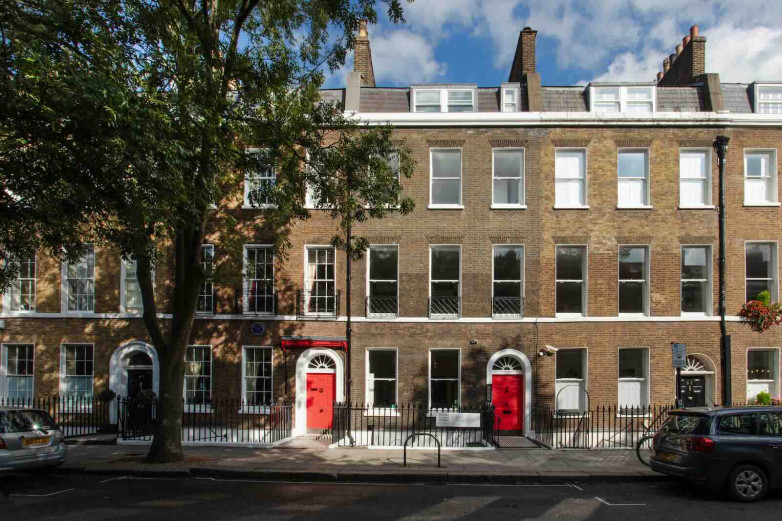
48 and 49 Doughty Street, the Charles Dickens Museum



168 years after London’s 'Great Stink' which forced the government to pass a law to build the sewer system still in use today, a new exhibition explores Charles Dickens’s obsession with what he considered the most pressing of all of London’s public health issues.
Dickensian London: The Magic Lantern City at the Charles Dickens Museum in London explores the city which delighted but also appalled Dickens. Running through April 18, 2027, it illustrates the strength of Dickens’s feelings about water pollution and public health in the years before the Great Stink, showing how the issue found its way into his work and private writing.
Dickens regularly published articles on water and sanitation for his journal Household Words, and supported schemes like the Thames Embankment which created the new city sewer system. In a speech to the Metropolitan Sanitary Association, quoted in the exhibition, Dickens declared that water reform must "precede all other social remedies, and that neither education nor religion can do anything useful" until it had been tackled.
As well as making his own protests, Dickens published the work of others on the same theme wherever possible. In 1851, seven years before the Great Stink, Household Words published a short story by Richard Horne which also features in the exhibition in which Mr Beverage meets old Father Thames who takes him on a tour of the river. Mr Beverage is horrified by the "black sluggish streams" of 141 sewers that flow straight into the Thames.
Among the items not previously displayed is a letter from August 5, 1846, in which Dickens wrote: "I hear rumours of the cholera being in London." Most people, including Dickens, believed the disease spread through the air. In 1849, Dr John Snow asserted that cholera was a water-borne infection, a theory finally accepted after further outbreaks, in 1854 and 1866, proved deaths were linked to the use of one specific water pump.
Throughout the exhibition, Dickens and his characters experience parts of London and reality and fiction become drawn together. In Little Dorrit, "people lived so unwholesomely that fair water put into their crowded rooms on Saturday night, would be corrupt on Sunday morning", thanks to the "deadly sewer" that is the River Thames. In Bleak House, London is a place of dirt and disease, from the fog that grips the city to the appalling conditions of the gruesome slum Tom-All-Alone’s which Dickens describes angrily as "a ruinous place", "a black, dilapidated street … [of] tumbling tenements … where the rain drips in … fetching and carrying fever". The exhibition features an illustration of Tom-All-Alone’s by Hablot Knight Browne (aka ‘Phiz’).
“While conditions in London today are a far cry from those experienced by Dickens in many ways, I can guess that were he here today, Dickens would be horrified to see the amount of pollution being allowed to pass into the UK’s rivers today," said Emma Harper, exhibition curator and Deputy Director at the Charles Dickens Museum. "Dickens was an urgent, restless campaigner wherever he saw people living in pitiful and toxic conditions and his speeches, letters and published articles are strikingly similar to those made today by anti-pollution campaigners."
Other highlights in the exhibition include:
- the wooden front door knocker from 16 Bayham Street, Camden Town, where the Dickens family lived before John Dickens was arrested for debt
- Charles Dickens’s walking stick
- an original handwritten manuscript of Oliver Twist and a 1904 edition of Barnaby Rudge bound in wood from Newgate Prison